-Aug-04-2026-10-23-01-6514-AM.png)
Independence Day is more than a single promotional event. It marks the beginning of India's festive shopping season, when consumers start discovering...
Read More
Independence Day is more than a single promotional event. It marks the beginning of India's festive shopping season, when consumers start discovering...
Read More
It’s early December. Across India and Southeast Asia, people are already getting into the holiday groove. But this year’s holiday season doesn’t just feel like any other. It feels different.
Because this time, consumer journeys don’t begin and end online — they ripple across screens, streets, and store aisles. And for brands, that means the holiday season isn’t just about discount banners and flash sales: it’s about orchestrating a full-funnel, multi-screen experience that ends in real-world conversions.
A new high‑water mark for ad spends
Brands in India are ramping up holiday advertising like never before. According to a recent report, consumer-facing brands in India are increasing their festive ad spends by 15–20% year-on-year in 2025. (storyboard18).
Within digital, three channels stand out:
Connected TV (CTV): Advertisers raised their CTV spends by roughly 20–30% in 2024 vs prior years, particularly drawn by premium audiences and festive content surges on Smart-TV platforms (afaqs.com).In short: brands are not just spending more — they’re redistributing budgets aggressively towards digital video, DOOH, and e-commerce media.
The holiday season in 2025 isn’t just louder. It’s stickier. A recent report shows that many Indian shoppers plan to spend more than ₹20,000 this season. Significantly, nearly half of holiday shoppers say they are open to trying new brands (brandequity.economictimes.indiatimes.com).
Meanwhile, consumer behavior is evolving: instead of a linear “see ad → click → buy” pattern, there’s now a cross-device, cross-moment journey. Many customers begin their discovery on mobile (browsing, deal-hunting), while CTV and DOOH add inspiration and branding heft (brandequity.economictimes.indiatimes.com).
This layered, omnichannel behavior is reshaping how brands plan their campaigns — and how they measure success.
Not all categories benefit equally from this festive explosion. The data reveals a few clear leaders:
Essentially: where high-intent purchase meets gifting or aspiration, brands are investing — heavily.
Here’s a truth often overlooked in the digital fervor: the offline store still matters, especially during the holidays.
With heavy footfall in malls, marketplaces, and festive hubs — and consumers increasingly deciding on the go — there’s a moment brands can’t ignore: bridging the digital inspiration with real-world action. That’s where drive-to-store strategies become mission-critical.
At mediasmart, we believe the future of festive marketing isn’t digital versus offline — it’s digital + offline, harmonized. Here’s how:
By tapping into data, location patterns, and behaviour signals, we build audiences likely to visit stores — not just click ads.
As users move near a store, or enter a relevant zone, ads trigger dynamically. Creative can adapt: “20% off till 9 PM, 500m to your nearest store.”
We measure real-world store visits, incremental lift, and cross-screen conversion attribution—powered by real-time location intelligence and proximity-based targeting.
Once a user has visited a store or shown interest, follow-up ads can target them across mobile or CTV — for loyalty, repeat purchase, or cross-sell.
In short: mediasmart helps brands bridge the digital-to-physical divide — exactly where festive purchase intent peaks.
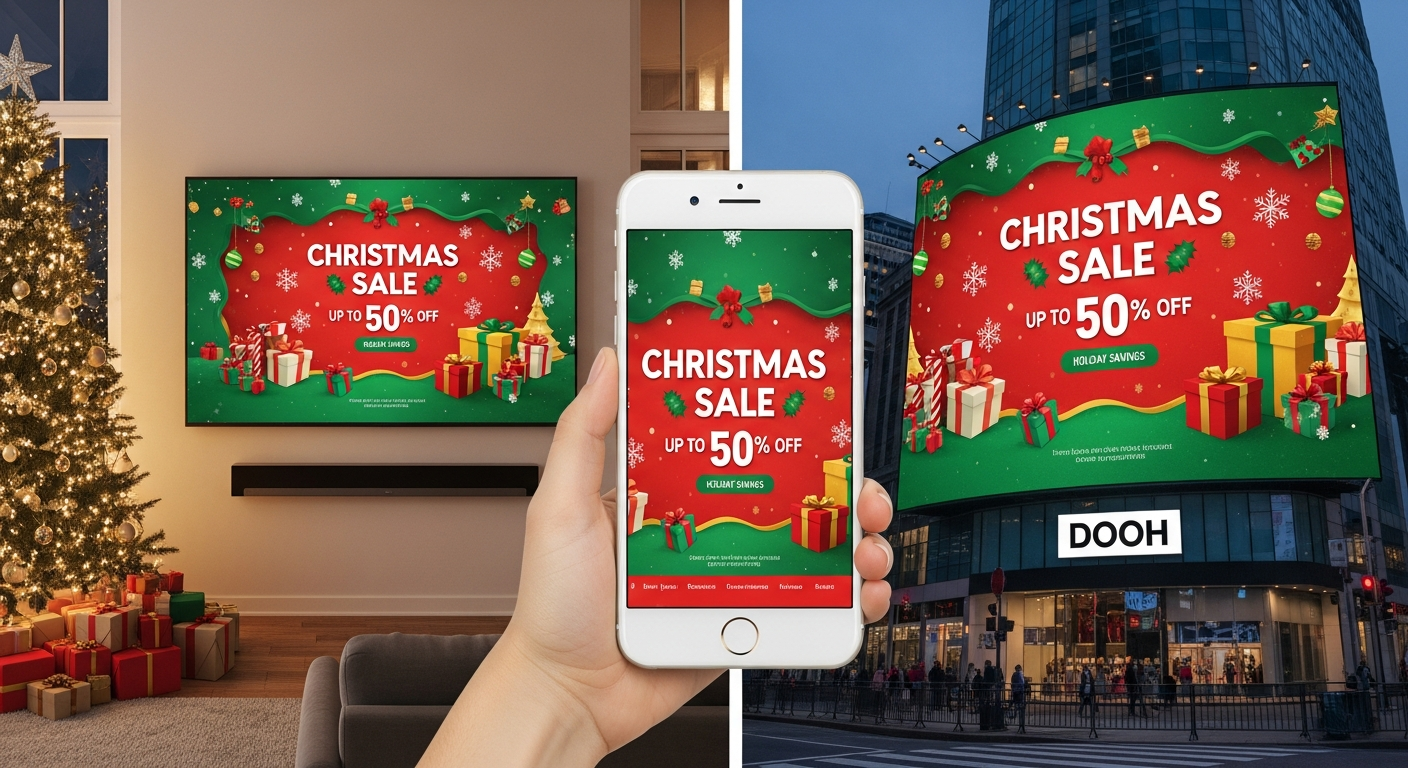
Holiday 2025 proves something many marketers have suspected for years: digital and physical shopping aren’t rivals anymore. They’re collaborators.
When a mother watches a festive ad on her Smart TV, adds the deal to her phone, then walks into a store a few hours later — that journey is the new reality. And it’s exactly the kind of experience mediasmart’s solutions are built for.
For brands that get this right — aligning storytelling with timing, screen with street, and data with emotion — the payoff isn’t just in clicks or views. It’s in walk-ins, conversions, and loyalty.
Because in the festive season, intention meets opportunity. And the screen that inspires might just lead your customer to your store.